Why layer at all
A single window furnishing usually has to compromise somewhere, a blind alone gives precise light control but not much softness, a curtain alone gives warmth and finish but binary light control. Layering lets each element do the job it’s actually best at, without asking one product to do everything.
The most common combination: blind plus curtain
A roller blind or Venetian mounted inside the reveal, with a full-length curtain hanging outside it, gives you day-to-day light control from the blind and the option to fully close the curtain for extra insulation, blackout or a softer finished look in the evening.
Sheers plus a heavier drape
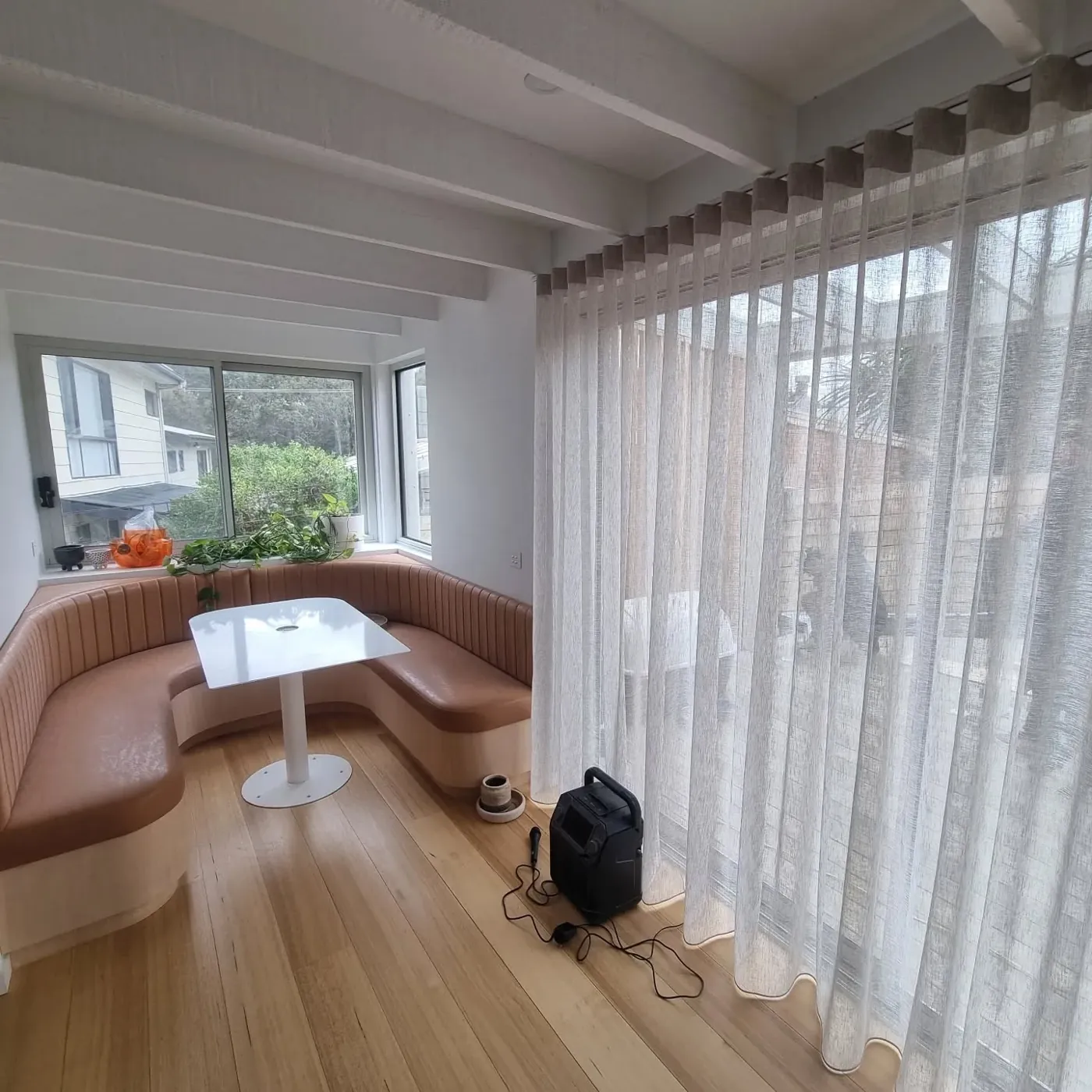
Sheers paired with a heavier blockout curtain on the same track is the other common combination, sheers filter light and give daytime privacy without closing the room off, while the heavier drape handles full blackout and insulation at night. This pairing works particularly well in living areas that get a lot of direct sun.
Getting the proportions right
The most common mistake with layering is under-sizing the curtain, a curtain that’s too narrow or too short to fully clear the window when open looks unfinished and defeats some of the insulation benefit when closed. As a rule of thumb, curtains should extend well past the window frame on each side and puddle just above the floor, not stop short.
Finishing the look with a pelmet box
A pelmet box across the top hides the track and header of a layered setup and, as a bonus, closes off the gap that would otherwise let warm air escape past the curtain top. It’s a small detail that makes a layered window look intentional rather than just two separate treatments stacked together.